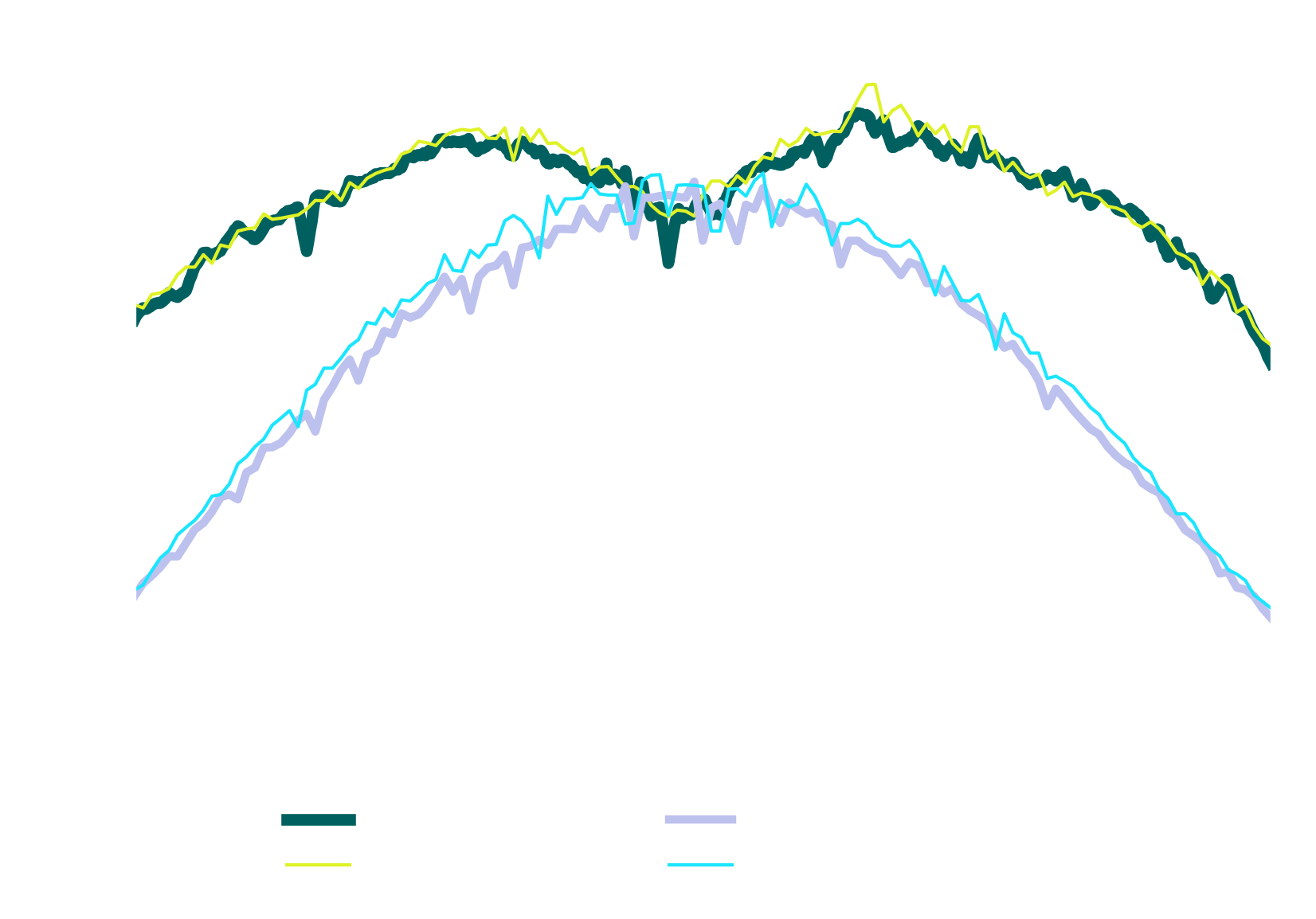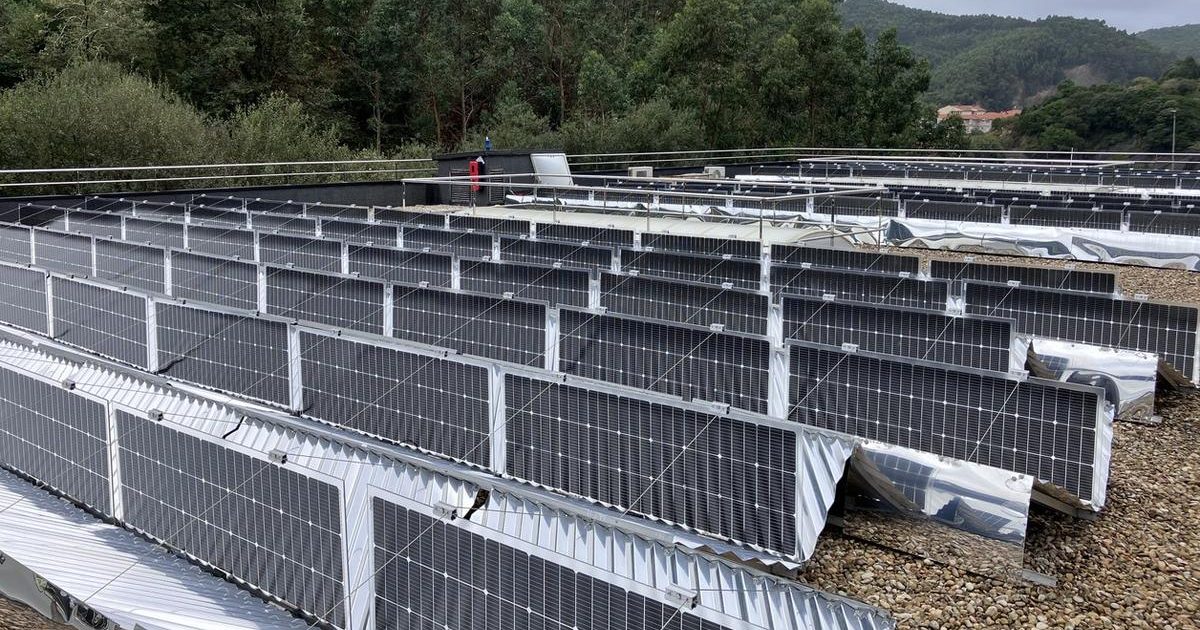
VectHor is a vertical bifacial PV system with reflectors: it combines vertical bifacial panels with patented reflectors to produce more in the morning, in the afternoon and in winter, when demand is highest and electricity is worth more. It works like a solar tracker, but without a single moving part.
Vertical bifacial PV with reflectors: how it works
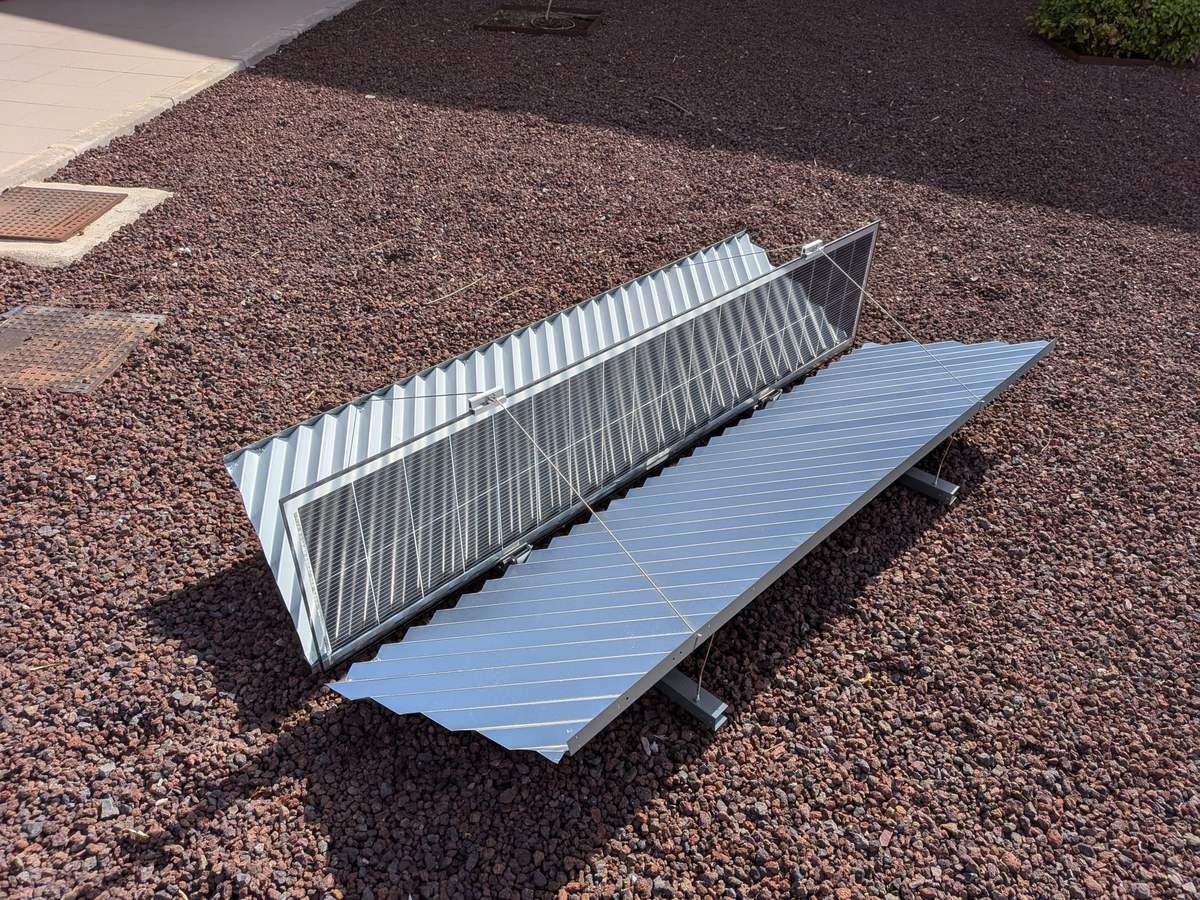
The panel is bifacial and mounted vertically, with one side facing east and the other facing west. It therefore receives direct sunlight twice a day: in the morning on one side and in the afternoon on the other. That is why the rear side contributes roughly half of the energy, and why we use high-bifaciality modules.
The reflectors sit on each side of the panel, with a slight tilt of about 12°. They are specular reflectors based on linear optics: they do not concentrate light on a point, as a concentrator would, but redirect it onto the panel to keep it close to its rated power for more hours. The panel receives an irradiance similar to that of a conventional solar panel at midday, but throughout the day, with no hot spots and no need for cooling.
Over the course of the day
- Morning. The east side receives direct sunlight and the reflector sends it additional light.
- Midday. With the sun high, the reflectors send part of the light back to the sky, just when energy is worth least.
- Afternoon. The same happens on the west side, until sunset.
The result is a more stable generation profile, aligned with the typical consumption curves of businesses and homes, instead of a midday peak. You can see a 3D animation on our technology page.
Even more in winter
In winter the sun is low and rises in the south-east, poorly oriented for an east-west plane and even worse for coplanar panels. This is where the reflector facets come in, designed to “lift” those low rays and redirect them onto the panel. According to our simulations for Madrid, from December to February VectHor produces twice as much per kWp as a coplanar east-west installation (+107%), compared with +63% over the whole year.
No moving parts
A tracker turns the panel towards the sun with motors. VectHor directs sunlight onto the panel without moving anything: there are no motors, controllers or wearing parts, and it does not need a safety stow position in high wind. That is why it can be installed on flat roofs, where a tracker is rarely viable because of weight or wind loads.
Results measured in 2026
Between 40% and 60% more energy and over 70% more revenue per installed kWp, measured at two sites in Spain, always against a fixed installation at the same location and over the same period.
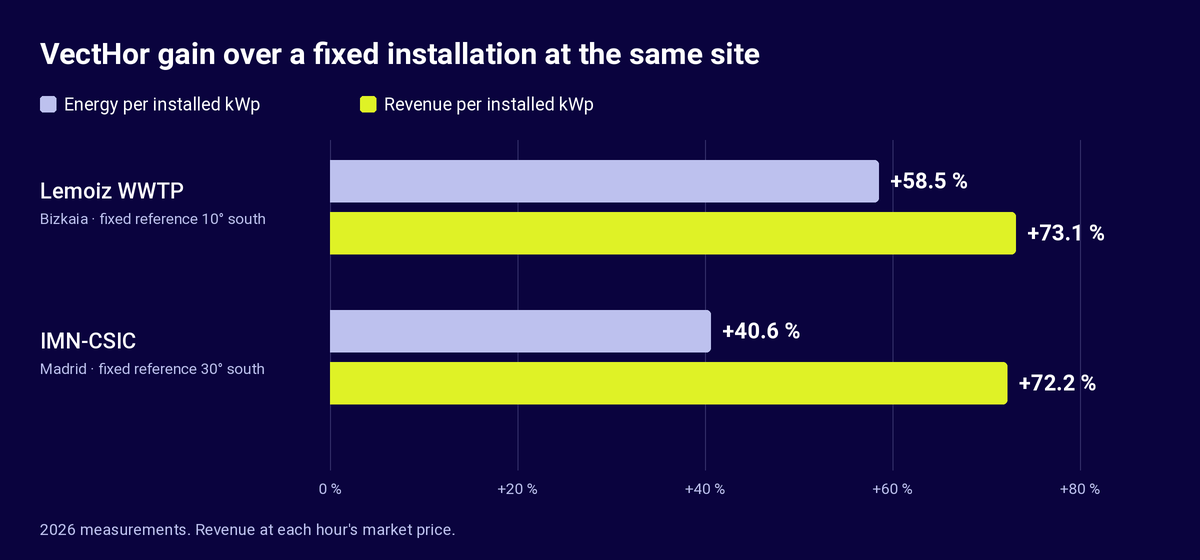
Revenue is calculated at each hour’s market price. The revenue gain exceeds the energy gain because VectHor produces more in the hours when electricity is worth more. In Germany, an independent research institute is measuring similar results, to be published soon.
Other measurement results
- Less soiling: 0.3% soiling loss for VectHor, compared with 2.2% for a fixed tilted installation, measured at our reference installation.
- Less heating: VectHor panels heat up less than fixed panels, even while producing more, because they are better cooled and less exposed to ultraviolet radiation.
- Less battery: five times less battery to use 98% of the energy in a business that consumes during the day, according to our simulations.
How much would your roof produce?
Estimate the production and return for your location with our solar income calculator, or get in touch and we will simulate your case with FVlib, our simulation software validated with field data.